Possessing both a passport and a MyKid card, yet ruled as a non-citizen? The "Painful Lesson of Total Defeat" in the Case Concerning Citizenship Rights for Children Born Out of Wedlock

📌 Core Case Details

👤 Main Character: Mr. H (of Indian descent, around 25 years old)

👶 Background:

Born in 2001 at Ipoh Central Hospital, his father is a Malaysian citizen and his mother is Thai. His parents never registered their marriage, and his mother left home when he was 1 year and 2 months old, disappearing ever since. He grew up getting vaccinated and attending school, got a Malaysian international passport at just over 1 year old, and even traveled to Sarawak using that passport.

⚖️ Judgment Result:

On June 30, 2026, the Court of Appeal rejected his citizenship application, even though he had a passport, MyKid number, and vaccination records from childhood.

⚖️ Three Key Legal Truths from the Court of Appeal Ruling


1️⃣ Being “born out of wedlock” breaks the paternal link (Appendix Two, Article 17 of the Constitution)

▫️ Legal rule: According to the Federal Constitution, if a child is born out of wedlock, the term “father” or “parent” in the law can legally only refer to the mother.

▫️ Court ruling: Because his parents never registered their marriage, Mr. H can only follow his mother’s (Thai) nationality. Even though his biological father is a Malaysian citizen, that blood link is legally invalid.

💡 Takeaway: The court’s job is not compassion, but strict enforcement of the Constitution’s text.

2️⃣ Passport and MyKid ≠ proof of citizenship

▫️ Common misconception: Just because the government issued a passport or MyKid, it means one is recognized as a citizen.

▫️ Court ruling:
🔹 Citizenship comes from the Federal Constitution, not a passport or birth certificate.
🔹 The government explained that when the passport was issued, the system wasn’t connected yet—an “administrative error.”
🔹 Administrative mistakes cannot override the Constitution; legally, there’s no such thing as “issued by mistake = citizenship.”

3️⃣ Very difficult “burden of proof” (Article 14(1)(e) of the Constitution)

▫️ Legal requirement: Children born in Malaysia who were not citizens at birth can apply for citizenship, but they must prove they didn’t inherit any foreign nationality at birth.
▫️ The practical challenge: Thai law says that if one parent is Thai, the child automatically gets Thai citizenship. Mr. H cannot prove he didn’t inherit Thai nationality from his mother—even if he now holds no foreign documents, it doesn’t mean he was “stateless” at birth.


💡 Options and Advice for Stateless People Over 21


⏳ Window missed:
▫️ The special protection under Article 15A of the Constitution only applies to minors under 21. Mr. H is now an adult, so that option is closed.

🏛️ Judge’s suggested route (Article 19 of the Constitution):
▫️ He can still try applying for naturalization/citizenship through an administrative process, since he has lived in Malaysia long enough.


🤝 Advice for families in similar situations:


▫️ Don’t wait until adulthood to deal with identity issues. If a child is facing something similar, make sure to complete legal registration early and keep every medical and identity record.


Legal Articles

Understanding the Special Commissioners and Tax Appeal Hearings in Malaysia

Understanding the Special Commissioners and Tax Appeal Hearings in Malaysia

Most Malaysians know that you can appeal your tax assessment if you think the Inland Revenue Board (LHDN) got it wrong. But many people do not know who actually decides those appeals and how the hearings work. This article explains , in plain language , the roles, procedures, and powers…
Understanding How a Tax Appeal Works in Malaysia

Understanding How a Tax Appeal Works in Malaysia

What Happens After You File a Tax AppealWhen a taxpayer disagrees with a tax assessment issued by the Inland Revenue Board (LHDN), the case can eventually go before a special panel known as the Special Commissioners of Income Tax. Think of them as the “judges” of Malaysia’s tax world —…
How to Appeal Your Income Tax Assessment in Malaysia — A Simple Guide

How to Appeal Your Income Tax Assessment in Malaysia — A Simple Guide

When you file your taxes, you expect the Inland Revenue Board (LHDN) to process your return correctly. But sometimes, you may receive a notice of assessment that you believe is wrong — maybe your income was overstated, or a deduction was missed. The Malaysian Income Tax Act 1967 gives you…
Understanding the Special Commissioners of Income Tax (SCIT) in Malaysia

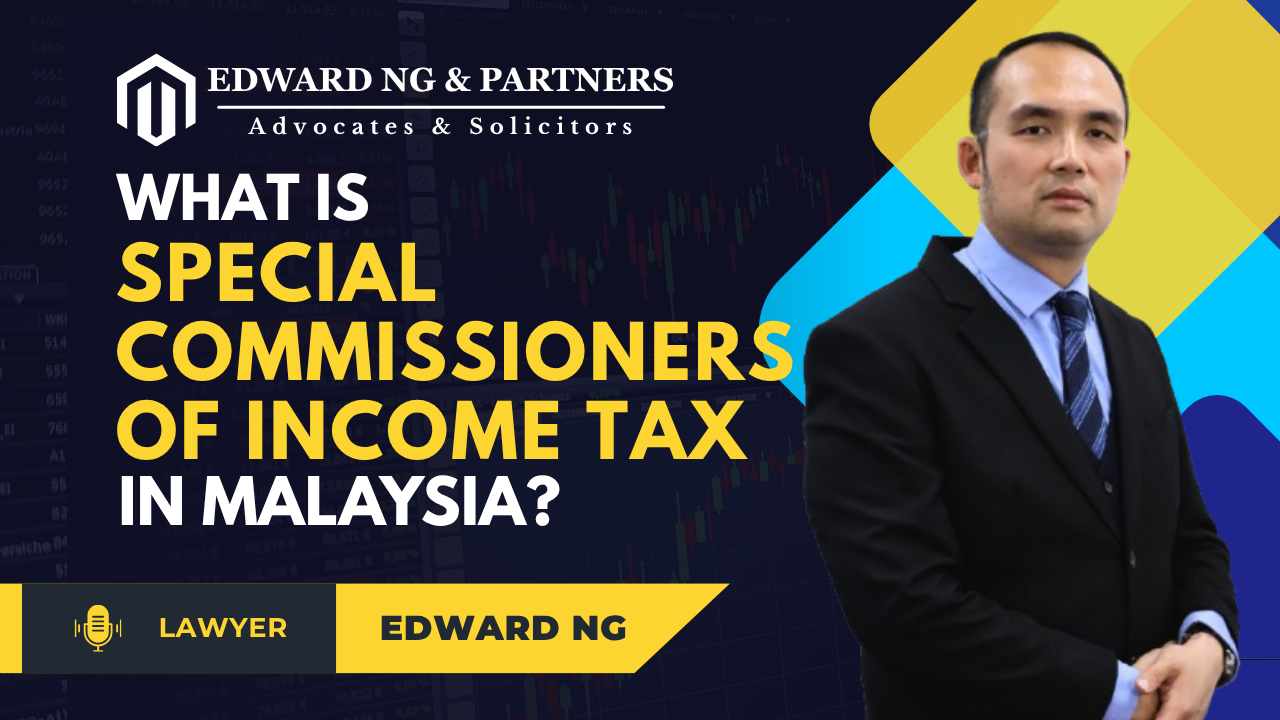
Understanding the Special Commissioners of Income Tax (SCIT) in Malaysia

The Special Commissioners of Income Tax (SCIT) serve as an independent tribunal established under the Income Tax Act 1967. Often regarded as Malaysia’s “tax court,” the SCIT is the first level of appeal for taxpayers who wish to challenge assessments made by the Inland Revenue Board (Lembaga Hasil Dalam Negeri,…

Save Tax with Industrial Building Allowance (IBA) | Malaysia Tax Law

Save Tax with Industrial Building Allowance (IBA) | Malaysia Tax Law

Understanding Industrial Building Allowance (IBA) Under the Malaysian Income Tax Act 1967The Industrial Building Allowance (IBA) is one of the key tax incentives available to businesses in Malaysia. It allows companies to reduce their taxable income by claiming deductions for the cost of constructing or purchasing qualifying industrial buildings. This…

error: Content is protected !!
Welcome to Edward Ng & Partners! Click to consult with our lawyer! 欢迎来到爱德华·黄律师事务所,点击联系我们的律师
//
Lawyer Edward Ng 黄志威律师 황지위 변호사
Divorce, Child Adoption, Will, Probate & LA, CIPAA, Civil & Corporate Litigation, Debt Recovery, Defamation, Tax Law.
Consult Lawyer 咨询律师 상담문의