
Who Owns the Embryos After Divorce?
Malaysia’s First Frozen Embryo Case Delivers a Landmark Judgment!

In 2025, the Malaysian Family High Court, in the case of RAH v RAL, addressed the legal status and control of frozen embryos following a divorce for the first time. The decision is regarded as a landmark development in Malaysian family law.

📌 Background of the Case

• The couple married in 2009 and underwent In Vitro Fertilisation (IVF) treatment in 2014 due to fertility difficulties.
• The embryos were created using the husband’s sperm and eggs donated by the wife’s sister, resulting in three embryos that were cryopreserved.
• Following the parties’ divorce in 2017, one of the embryos was used, and a daughter was born in 2022.
• The dispute concerned the remaining two frozen embryos.

📌 Parties’ Positions

• The wife sought control of the embryos in order to have the possibility of future childbearing.
• The husband opposed the application and did not wish to become a father again.

📌 Key Findings of the Court

• The embryos were lawfully created through a recognised IVF procedure.
• The embryos ❌ were not considered “persons” because they had not acquired legal personality.
• The embryos ❌ were also not regarded as ordinary property capable of being divided or sold.
➡️ Instead, they were recognised as occupying a unique legal status somewhere between a person and property.

📌 How the Court Approached the Issue

• The Court focused on the concept of control, rather than custody or ownership.
• The Court balanced two competing rights:

• The right to procreate
• The right not to be compelled into parenthood

📌 Decision of the Court

• Control of the embryos was granted to the wife.
• However, the order was subject to several conditions:

• The husband would not be responsible for any expenses relating to the embryos or any future child.
• The wife would not be entitled to claim maintenance from the husband if a child were subsequently born.
• All relevant medical regulations and institutional requirements must be complied with.

📌 Significance of the Decision

• It is the first reported Malaysian case dealing with frozen embryos after divorce.
• It establishes the principle that the law should not compel a person to become a parent against his or her will.
• It demonstrates the Court’s attempt to balance advances in reproductive technology, ethical considerations, and human interests.

📌 Future Legal Issues Raised by the Case

• Donation of embryos and their use in scientific research
• Posthumous use of embryos after the death of one party
• Surrogacy arrangements and legal parentage issues
• Cross-border surrogacy and conflicts of law

📌 Conclusion

Under Malaysian law, frozen embryos are:

👉 Neither “persons” nor “property”
👉 Not assets that can simply be divided upon divorce
👉 Subject to judicial determination regarding who should exercise control over them, based on principles of fairness and justice

⚖️ As assisted reproductive technology becomes increasingly common, the development of a clearer and more comprehensive legal framework is becoming an urgent necessity.

Legal Articles

If the abuser damages property, can the money be recovered?

If the abuser damages property, can the money be recovered?

In daily life, if financial losses occur—for example, a car mirror is smashed or valuable items are damaged—the victim may seek compensation from the perpetrator through legal means. Civil compensation is entirely possible, but several practical considerations should be weighed before initiating legal proceedings. First, it is necessary to evaluate…
Custody of a 7-Year-Old Automatically Granted to the Mother!? A Comprehensive Guide to Custody and Visitation Rights!!

Custody of a 7-Year-Old Automatically Granted to the Mother!? A Comprehensive Guide to Custody and Visitation Rights!!

Many people, when they hear the term “custody,” automatically associate it with divorce. However, in reality, custody issues are often more urgent and need to be addressed first—especially when the parents’ relationship has already broken down, or they have been separated for a long time, and one party is being…
Understanding the Special Commissioners and Tax Appeal Hearings in Malaysia

Understanding the Special Commissioners and Tax Appeal Hearings in Malaysia

Most Malaysians know that you can appeal your tax assessment if you think the Inland Revenue Board (LHDN) got it wrong. But many people do not know who actually decides those appeals and how the hearings work. This article explains , in plain language , the roles, procedures, and powers…
Understanding How a Tax Appeal Works in Malaysia

Understanding How a Tax Appeal Works in Malaysia

What Happens After You File a Tax AppealWhen a taxpayer disagrees with a tax assessment issued by the Inland Revenue Board (LHDN), the case can eventually go before a special panel known as the Special Commissioners of Income Tax. Think of them as the “judges” of Malaysia’s tax world —…
How to Appeal Your Income Tax Assessment in Malaysia — A Simple Guide

How to Appeal Your Income Tax Assessment in Malaysia — A Simple Guide

When you file your taxes, you expect the Inland Revenue Board (LHDN) to process your return correctly. But sometimes, you may receive a notice of assessment that you believe is wrong — maybe your income was overstated, or a deduction was missed. The Malaysian Income Tax Act 1967 gives you…
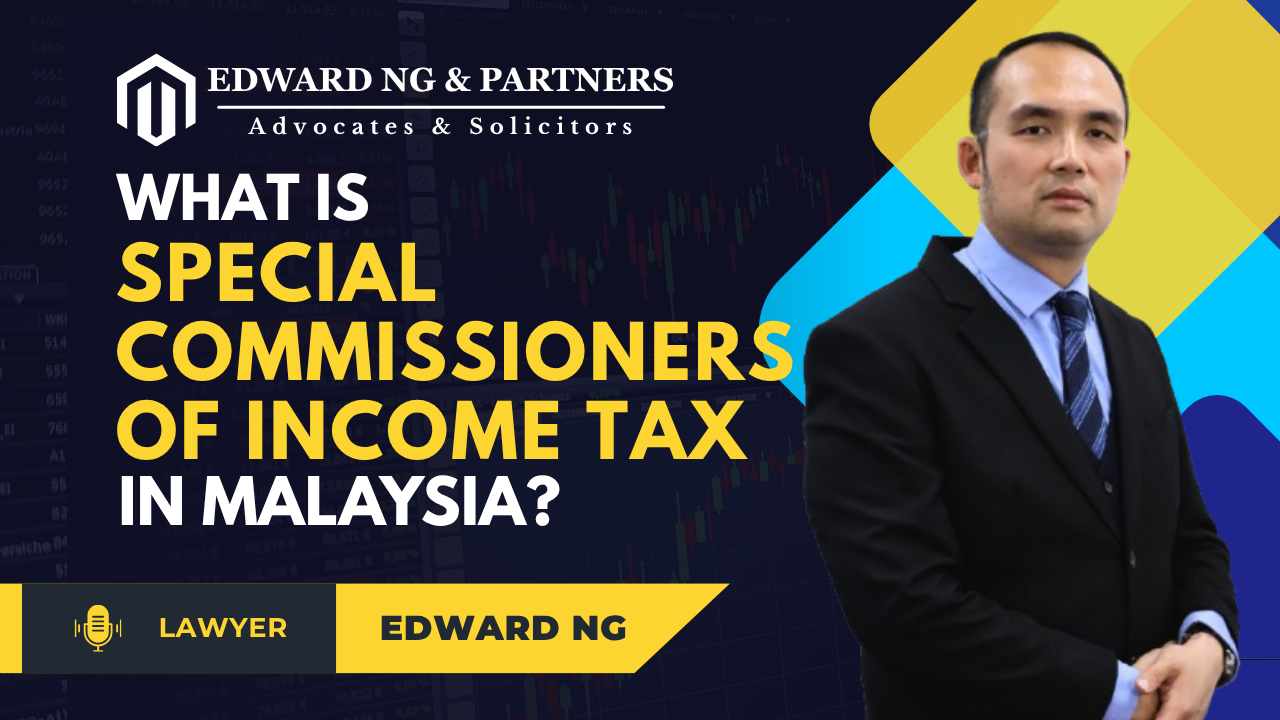
Understanding the Special Commissioners of Income Tax (SCIT) in Malaysia

Understanding the Special Commissioners of Income Tax (SCIT) in Malaysia

The Special Commissioners of Income Tax (SCIT) serve as an independent tribunal established under the Income Tax Act 1967. Often regarded as Malaysia’s “tax court,” the SCIT is the first level of appeal for taxpayers who wish to challenge assessments made by the Inland Revenue Board (Lembaga Hasil Dalam Negeri,…

Save Tax with Industrial Building Allowance (IBA) | Malaysia Tax Law

Save Tax with Industrial Building Allowance (IBA) | Malaysia Tax Law

Understanding Industrial Building Allowance (IBA) Under the Malaysian Income Tax Act 1967The Industrial Building Allowance (IBA) is one of the key tax incentives available to businesses in Malaysia. It allows companies to reduce their taxable income by claiming deductions for the cost of constructing or purchasing qualifying industrial buildings. This…

error: Content is protected !!
Welcome to Edward Ng & Partners! Click to consult with our lawyer! 欢迎来到爱德华·黄律师事务所,点击联系我们的律师
//
Lawyer Edward Ng 黄志威律师 황지위 변호사
Divorce, Child Adoption, Will, Probate & LA, CIPAA, Civil & Corporate Litigation, Debt Recovery, Defamation, Tax Law.
Consult Lawyer 咨询律师 상담문의